
RPNI wraps the end of an injured nerve in a small free muscle graft — giving regenerating fibers a healthy target so they stop forming painful neuromas.
Nerve target
Neuromas
Prosthetic control
RPNI takes the cut end of a nerve and implants it into a small piece of free muscle. The nerve fibers grow into that muscle and reinnervate it — giving them a biological job instead of forming a disorganized, painful neuroma.
Beyond pain prevention, RPNIs can generate clean signals for advanced, intuitive prosthetic control — a key reason the technique has transformed amputation care.
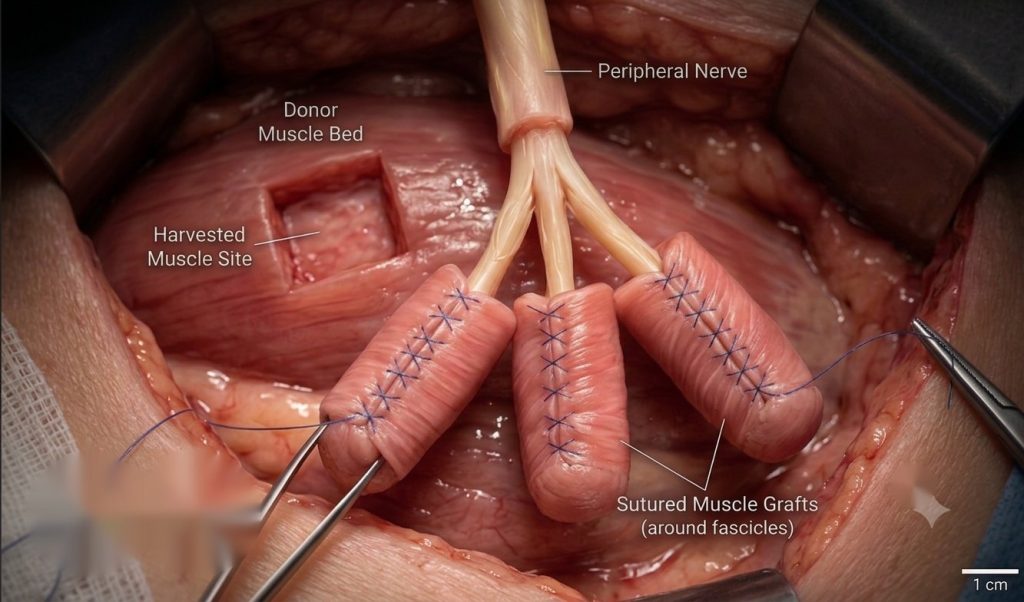
Fig: An RPNI: small free muscle grafts are wrapped around individual nerve fascicles to give them a healthy target.
Performed during amputation to prevent neuromas and phantom pain before they start.
Used when treating an established painful neuroma to prevent recurrence.
Creates signal sites for advanced myoelectric and bionic prosthetic control.
The nerve end is identified and gently prepared under magnification.
A small free muscle graft is taken from a nearby expendable site.
The nerve fascicle is wrapped within the muscle graft and secured.
Over months, the nerve reinnervates the graft, providing a stable endpoint.
Peripheral nerve surgery is its own discipline. Dr. Michaeli has dedicated his practice to the nerves, with fellowship-level training and thousands of nerve procedures.
Nerve work is measured in millimeters. Every repair is performed under high-magnification with microsurgical instruments and the latest reconstructive techniques.
Many patients arrive having been told nothing more can be done. A dedicated nerve evaluation often reveals options that general specialists do not offer.
The grafts heal in place; the surgical site settles.
Nerve fibers grow into the muscle grafts, reducing pain signals.
Pain relief stabilizes; prosthetic fitting and signal use can advance.
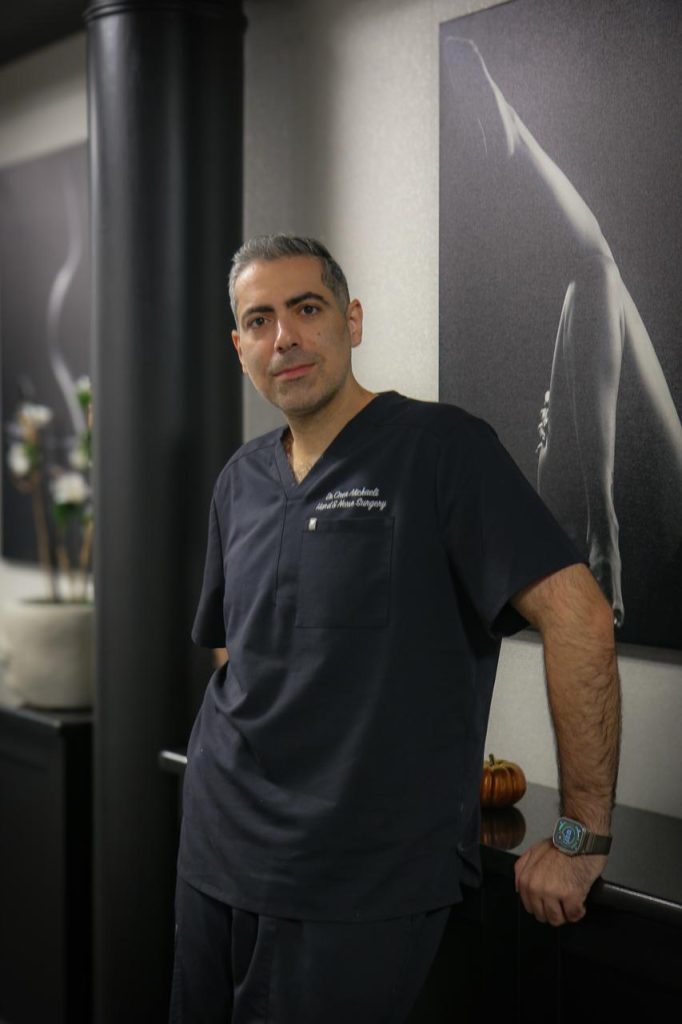
Peripheral Nerve & Brachial Plexus Surgeon · New Jersey & New York
Dr. Michaeli is among the most experienced and trusted peripheral nerve specialists on the East Coast, combining board-certified hand surgery expertise with dedicated peripheral nerve training. He has helped patients across the region regain function when they were told nothing more could be done.
Most peripheral nerve procedures are medically necessary and covered by insurance. Our team will help you understand your benefits and assemble the documentation your plan requires.
How wrapping a nerve in muscle prevents neuromas and enables better prosthetic control.
A short explainer video from Dr. Michaeli will appear here. Replace the poster with your YouTube or Vimeo embed when ready.
“After years of being told my pain was something I’d have to live with, Dr. Michaeli found the nerve causing it and fixed it.”
Neuroma surgery
“I had given up hope of using my hand again. The nerve transfer gave me back movement the other doctors said was gone.”
Nerve transfer
“The carpal tunnel release was quick and the night pain was gone immediately. I only wish I’d done it sooner.”
Carpal tunnel release
Schedule a consultation with Dr. Michaeli to understand your options and build a plan that fits your life.