
Pain after amputation — whether felt in the residual limb or the missing limb — is real, common, and treatable. Modern nerve surgery targets its source.
& residual pain
Proven techniques
Tolerance improves
After an amputation, the cut nerves can form painful neuromas, and the brain may continue to perceive the absent limb — producing phantom limb pain. Both can severely limit comfort and the ability to wear a prosthesis.
Techniques like RPNI and TMR give the cut nerves a healthy place to terminate, dramatically reducing both residual and phantom pain — and they can be performed at the time of amputation or years later.
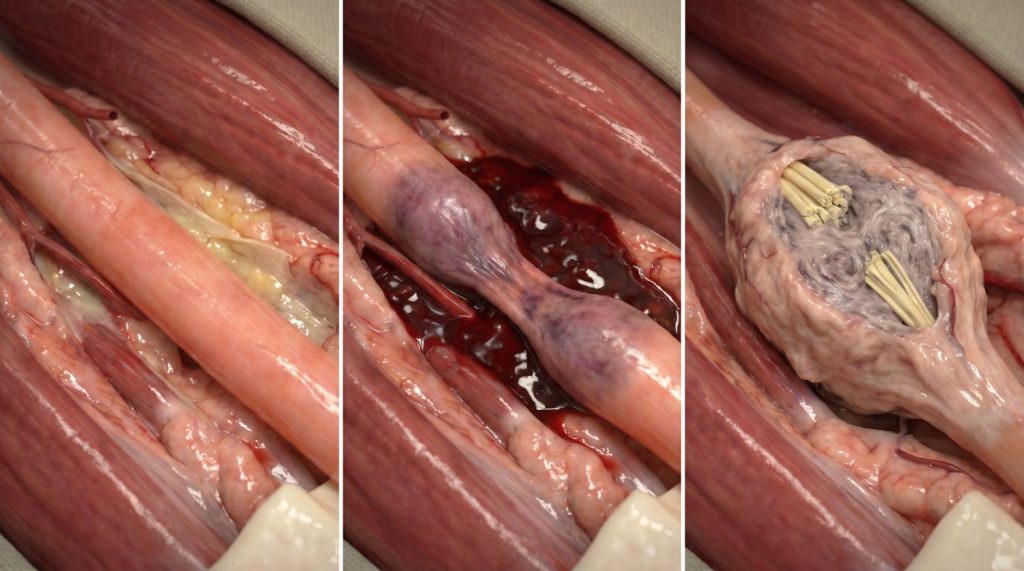
Fig: How an injured nerve end develops into a painful neuroma — the source of much post-amputation pain.
Learn about phantom limb pain — causes, symptoms, and treatment options.
Learn about residual limb neuroma pain — causes, symptoms, and treatment options.
Peripheral nerve surgery is its own discipline. Dr. Michaeli has dedicated his practice to the nerves, with fellowship-level training and thousands of nerve procedures.
Nerve work is measured in millimeters. Every repair is performed under high-magnification with microsurgical instruments and the latest reconstructive techniques.
Many patients arrive having been told nothing more can be done. A dedicated nerve evaluation often reveals options that general specialists do not offer.
Regenerative Peripheral Nerve Interface gives each nerve a muscle target, preventing painful neuromas.
Targeted Muscle Reinnervation reroutes nerves into motor branches for durable pain relief and better prosthetic control.
Existing painful neuromas are addressed at their source rather than simply trimmed.
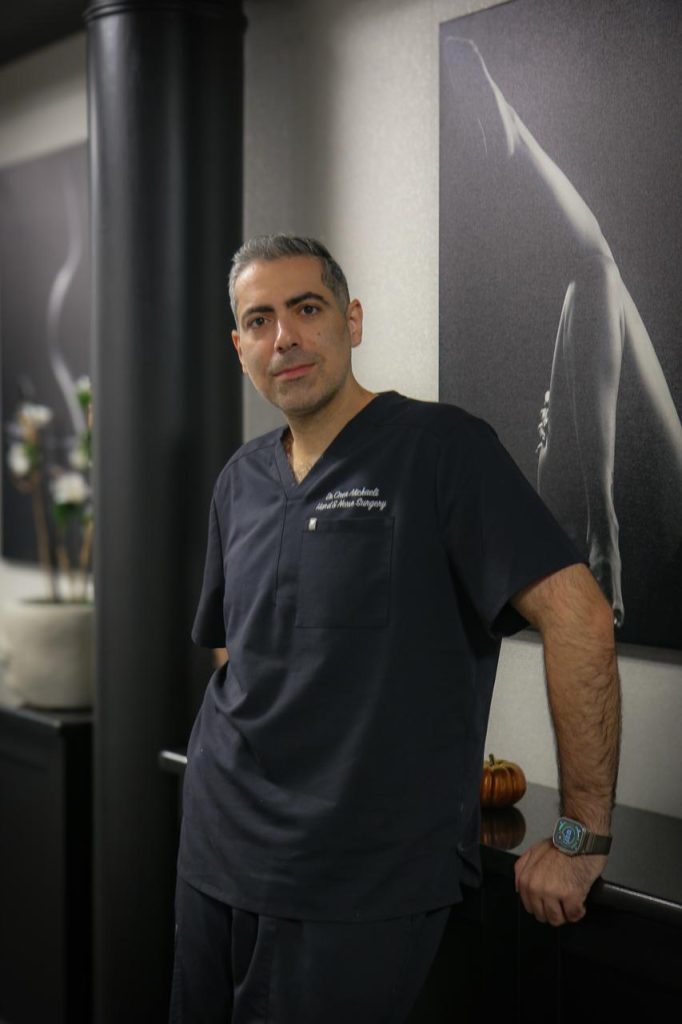
Peripheral Nerve & Brachial Plexus Surgeon · New Jersey & New York
Dr. Michaeli is among the most experienced and trusted peripheral nerve specialists on the East Coast, combining board-certified hand surgery expertise with dedicated peripheral nerve training. He has helped patients across the region regain function when they were told nothing more could be done.
Dr. Michaeli explains what is happening to the nerve, the treatment options, and what recovery looks like.
A short explainer video from Dr. Michaeli will appear here. Replace the poster with your YouTube or Vimeo embed when ready.
“After years of being told my pain was something I’d have to live with, Dr. Michaeli found the nerve causing it and fixed it.”
Neuroma surgery
“I had given up hope of using my hand again. The nerve transfer gave me back movement the other doctors said was gone.”
Nerve transfer
“The carpal tunnel release was quick and the night pain was gone immediately. I only wish I’d done it sooner.”
Carpal tunnel release
In most cases no referral is required to schedule a consultation. We will help you understand your insurance coverage and any documentation your plan may request.
No. Many nerve conditions are first managed without surgery. Dr. Michaeli will recommend the least invasive effective option for your specific situation and only proceed to surgery when it offers the best outcome.
Nerve tissue is time-sensitive. The earlier a compressed or injured nerve is evaluated, the more options exist to protect and restore function. If you have progressive weakness or numbness, seek evaluation promptly.
Schedule a consultation with Dr. Michaeli to understand your options and build a plan that fits your life.