
One of the most powerful tools in modern nerve surgery: a working, expendable nerve is rerouted to power a paralyzed muscle — often restoring movement faster than waiting for a long regeneration.
Paralyzed muscle
Than long grafts
Donor nerves
A nerve transfer takes a healthy nerve with a function the body can spare and reroutes it to restore a more important lost function. Because the new connection is made close to the target muscle, fibers have a short distance to travel — which can mean faster, more reliable recovery than repairing an injury far away.
Nerve transfers are central to treating brachial plexus injuries, spinal cord injuries, and isolated paralysis. The art lies in choosing a donor whose loss is imperceptible while the gain is life-changing.
When the original nerves cannot be repaired in time, transfers re-power the arm.
Working nerves above the injury are rerouted to restore hand or arm function.
A single paralyzed muscle group can be re-powered by a nearby donor nerve.
Dr. Michaeli identifies which functions are lost and which donor nerves can be spared.
An expendable nerve with a strong signal is chosen for transfer.
The donor is connected to the recipient near the target muscle, tension-free.
Therapy retrains the brain to drive the newly connected muscle as recovery proceeds.
Peripheral nerve surgery is its own discipline. Dr. Michaeli has dedicated his practice to the nerves, with fellowship-level training and thousands of nerve procedures.
Nerve work is measured in millimeters. Every repair is performed under high-magnification with microsurgical instruments and the latest reconstructive techniques.
Many patients arrive having been told nothing more can be done. A dedicated nerve evaluation often reveals options that general specialists do not offer.
The transfer heals; therapy maintains joint motion and prepares for re-education.
The muscle begins to respond as fibers reach it; movement returns gradually.
With retraining, strength and coordinated control continue to build.
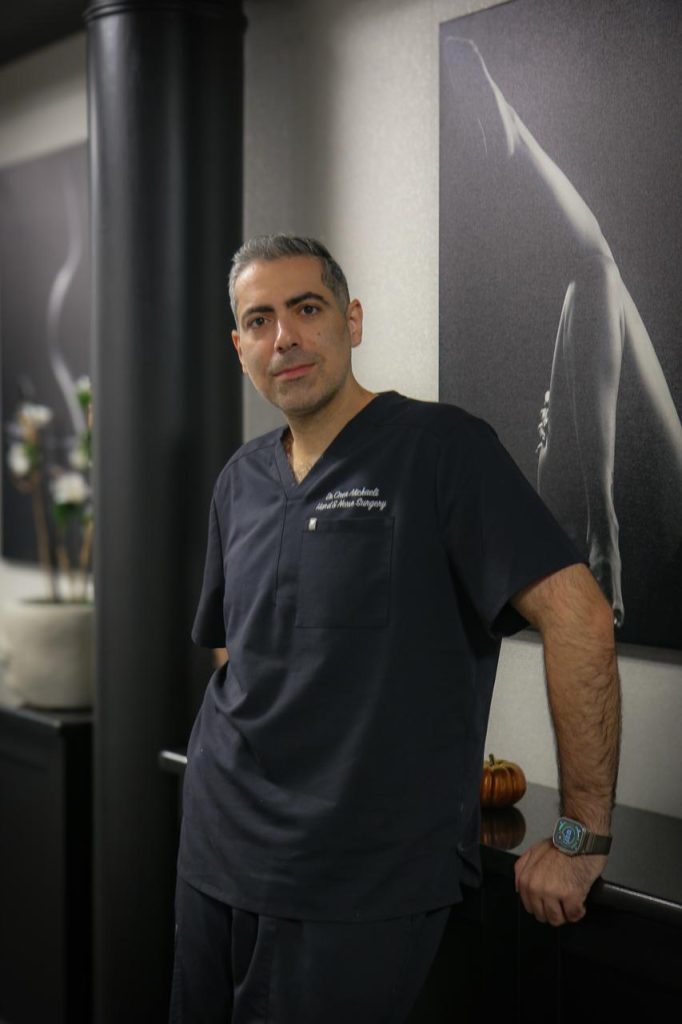
Peripheral Nerve & Brachial Plexus Surgeon · New Jersey & New York
Dr. Michaeli is among the most experienced and trusted peripheral nerve specialists on the East Coast, combining board-certified hand surgery expertise with dedicated peripheral nerve training. He has helped patients across the region regain function when they were told nothing more could be done.
Most peripheral nerve procedures are medically necessary and covered by insurance. Our team will help you understand your benefits and assemble the documentation your plan requires.
How rerouting a healthy nerve restores movement — and why timing changes what’s possible.
A short explainer video from Dr. Michaeli will appear here. Replace the poster with your YouTube or Vimeo embed when ready.
This patient suffered a brachial plexus injury and underwent a series of nerve transfers with Dr. Michaeli to restore movement and function to the arm. He shares his recovery and what the process was like in his own words.
A short explainer video from Dr. Michaeli will appear here. Replace the poster with your YouTube or Vimeo embed when ready.
“After years of being told my pain was something I’d have to live with, Dr. Michaeli found the nerve causing it and fixed it.”
Neuroma surgery
“I had given up hope of using my hand again. The nerve transfer gave me back movement the other doctors said was gone.”
Nerve transfer
“The carpal tunnel release was quick and the night pain was gone immediately. I only wish I’d done it sooner.”
Carpal tunnel release