
A cut nerve does not heal on its own the way skin does. Whether partial or complete, a nerve laceration needs precise microsurgical repair to restore feeling and movement.
or complete injury
Repair technique
Sensitive to delay
When a nerve is cut — by glass, a blade, or trauma — the fibers below the injury are disconnected from the brain. The result is loss of sensation, loss of movement, or both, in everything that nerve supplies.
Unlike a cut on the skin, a divided nerve will not simply knit back together. The severed ends must be microsurgically aligned and repaired so regenerating fibers can cross the gap and find their way back to the muscle and skin they once served.

Fig: A completely transected nerve — the two ends are fully separated and cannot reconnect without repair.
The pattern of lost sensation and movement tells Dr. Michaeli which nerve is injured and how completely. Exploration is sometimes the most reliable way to assess the injury directly. Timing matters — early repair generally yields the best recovery.
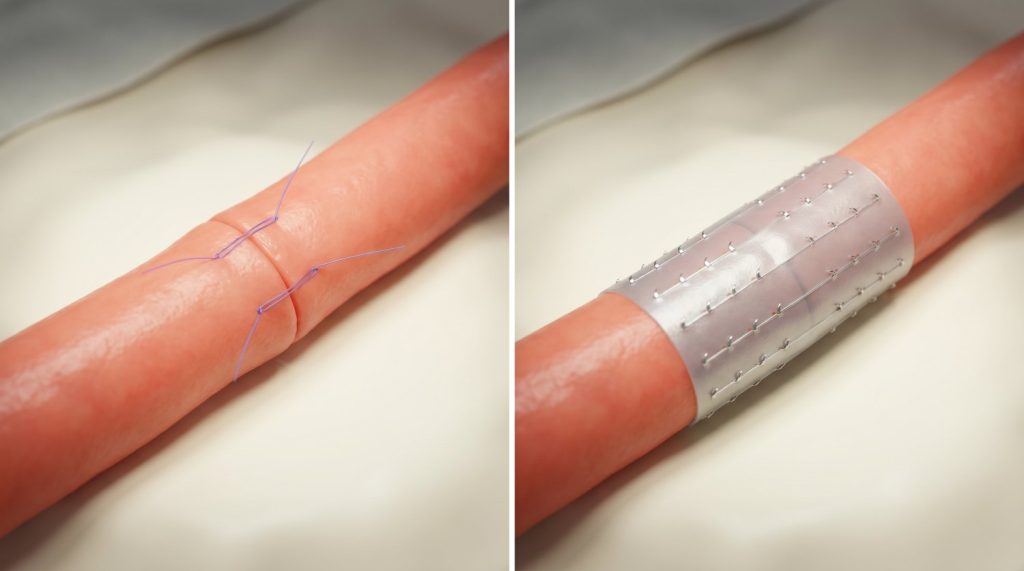
Fig: Two repair strategies: traditional microsuture coaptation (left) and modern nerve-tape assisted repair (right).
Peripheral nerve surgery is its own discipline. Dr. Michaeli has dedicated his practice to the nerves, with fellowship-level training and thousands of nerve procedures.
Nerve work is measured in millimeters. Every repair is performed under high-magnification with microsurgical instruments and the latest reconstructive techniques.
Many patients arrive having been told nothing more can be done. A dedicated nerve evaluation often reveals options that general specialists do not offer.
Examination, nerve studies, and diagnostic blocks identify the exact nerve generating your pain.
From decompression to neuroma surgery, treatment is matched to the cause.
The goal is not to mask pain but to address its nerve source so relief endures.
The repair is protected while the coaptation site heals. Therapy preserves joint motion.
Nerve fibers regrow roughly an inch a month. A advancing Tinel’s sign tracks progress.
Sensation and movement return progressively as fibers reach their targets.
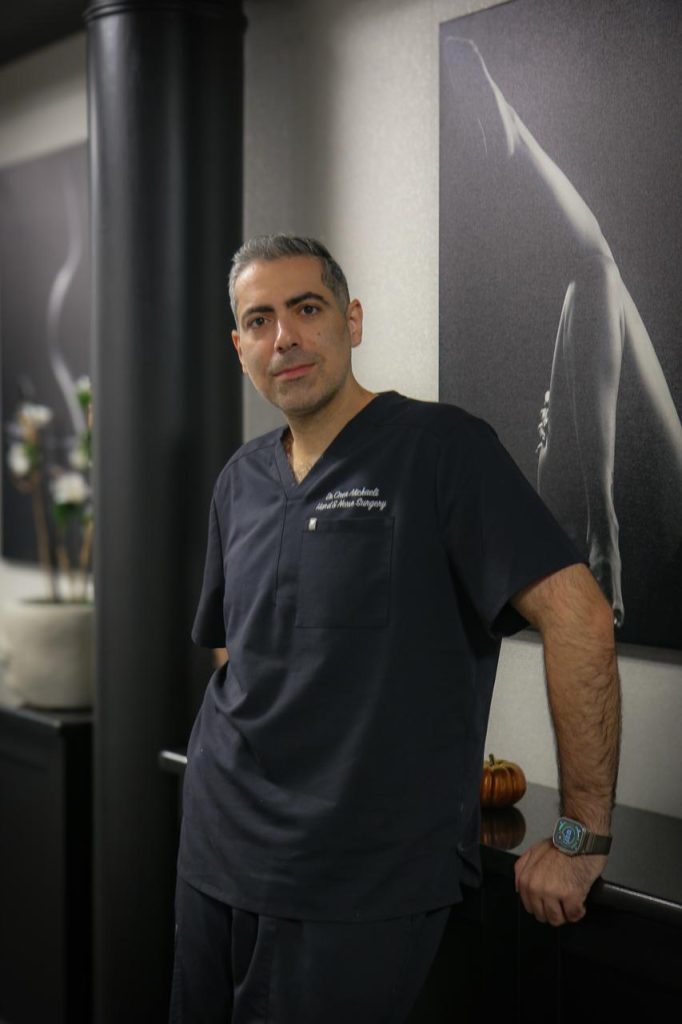
Peripheral Nerve & Brachial Plexus Surgeon · New Jersey & New York
Dr. Michaeli is among the most experienced and trusted peripheral nerve specialists on the East Coast, combining board-certified hand surgery expertise with dedicated peripheral nerve training. He has helped patients across the region regain function when they were told nothing more could be done.
Dr. Michaeli explains what is happening to the nerve, the treatment options, and what recovery looks like.
A short explainer video from Dr. Michaeli will appear here. Replace the poster with your YouTube or Vimeo embed when ready.
“After years of being told my pain was something I’d have to live with, Dr. Michaeli found the nerve causing it and fixed it.”
Neuroma surgery
“I had given up hope of using my hand again. The nerve transfer gave me back movement the other doctors said was gone.”
Nerve transfer
“The carpal tunnel release was quick and the night pain was gone immediately. I only wish I’d done it sooner.”
Carpal tunnel release
Sooner is better. Sharp, clean lacerations are ideally repaired within days. Even older injuries can often be reconstructed, but the window for the best outcome is time-sensitive — seek evaluation promptly.
Recovery depends on the nerve, the injury, and how early it’s treated. Microsurgical repair gives regenerating fibers the best possible chance to reach their targets.
Nerve tissue is time-sensitive. The earlier a compressed or injured nerve is evaluated, the more options exist to protect and restore function. If you have progressive weakness or numbness, seek evaluation promptly.
Schedule a consultation with Dr. Michaeli to understand your options and build a plan that fits your life.